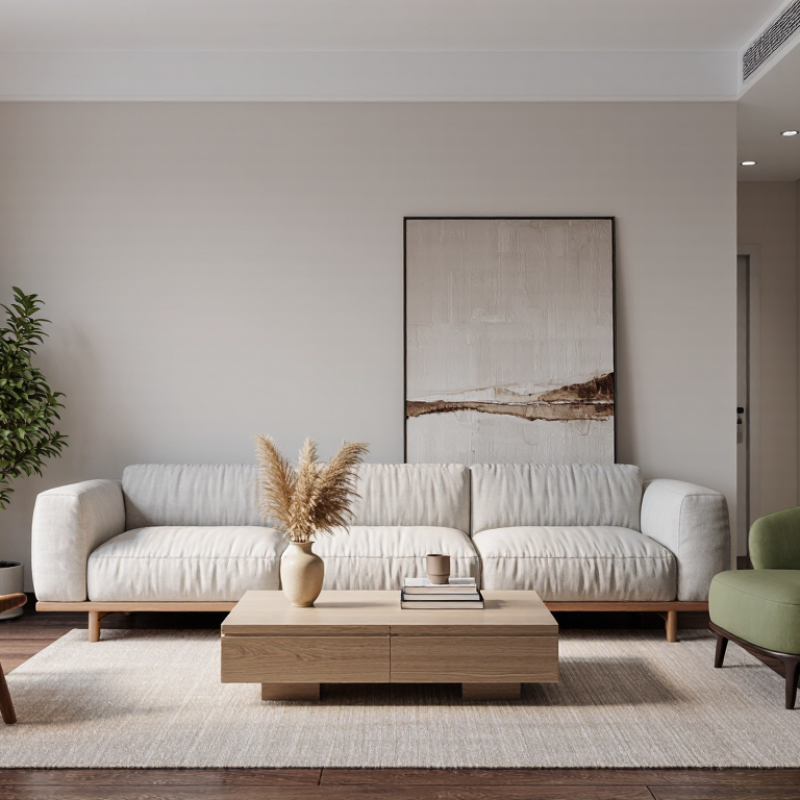
Choosing furniture for dark wood flooring is less about following a fixed color rule. It is about controlling contrast, warmth, and visual weight. What color furniture goes with dark wood floors depends on the room’s natural light, wall color, ceiling height, and existing materials. A pale cream sofa can brighten a shadowy living room. Warm beige, camel, and muted taupe can soften the floor without creating a cold appearance. For a stronger design statement, olive green, dusty blue, or terracotta upholstery adds color while respecting the wood’s richness.
Interior designer Emily Henderson often emphasizes the importance of contrast in layered rooms. She says, “A room needs contrast to feel balanced.” That idea works especially well here. Dark flooring can make heavy walnut furniture feel dense, particularly in rooms with small windows. Lighter oak, painted wood, linen, and woven rattan usually create more breathing space. Black furniture can also work, but only when lighter textiles or reflective surfaces interrupt the darkness.
Test before committing.
Place fabric samples directly on the floor during morning and evening light. I have found that a beige labeled “warm” can look yellow beside red-toned wood. A gray sofa may appear elegant in photographs, yet lifeless beside cool espresso flooring. That is the imperfect part of decorating: the color chart cannot predict every room. This guide will examine furniture colors, finishes, textures, and practical combinations, helping you choose a palette that feels intentional rather than simply safe.
What Color Furniture Goes With Dark Wood Floors?
Understanding How Dark Wood Floors Affect Furniture Color Choices
Dark wood floors do more than set a tone. They change how every nearby color appears. Their deep surface absorbs light, so heavy furniture can make a room feel smaller. I usually examine the floor’s undertone before choosing upholstery or case goods. Brown floors may lean red, yellow, or neutral. A warm undertone can make creamy furniture look balanced, while cool gray-brown flooring may suit soft white or muted blue.
Light furniture creates useful contrast. Try ivory, sand, pale gray, or light natural wood for a brighter visual plane. A linen sofa, oak table, and woven rug can keep the floor from dominating. For a stronger mood, consider olive, smoky blue, or clay-colored seating. These shades add depth without competing with the grain. Bright white can work too. Sometimes it feels harsh.
Test samples beside the floor during morning and evening light. Store lighting often hides undertones. Place a fabric swatch, wood sample, and cushion together for several days. Notice reflections from windows and lamps. A large rug can separate dark flooring from dark furniture, but its pattern should leave some floor visible. I once favored a dramatic charcoal chair in a dark room; it looked refined in photographs and gloomy in person. The better choice was a lighter textured chair, although it required more maintenance. Practical comfort matters as much as color.
| Dark Floor Characteristic | Furniture Colors That Work Well | Recommended Accent Colors | Visual Effect | Colors and Finishes to Use Carefully |
|---|---|---|---|---|
|
Warm-toned dark wood Floors with red, orange, honey, or reddish-brown undertones. |
Cream, ivory, soft beige, camel, warm gray, and natural linen upholstery.
These colors create separation from the floor without making the room feel cold.
|
Terracotta, muted olive, dusty blue, aged brass, and soft rust.
Use these colors in pillows, artwork, rugs, or occasional chairs.
|
A welcoming, layered, and visually balanced room with a comfortable traditional or contemporary feel. | Large amounts of orange-red furniture or highly reddish wood can make the room look overly matched. Very cool blue-gray may also appear disconnected from the flooring. |
|
Cool-toned dark wood Floors with gray, charcoal, espresso, or subtle blue-violet undertones. |
Light gray, greige, ivory, muted blue, sage green, and medium natural wood.
These tones soften the contrast while preserving a modern appearance.
|
Navy, eucalyptus green, black metal, brushed nickel, and muted blush.
Limit strong accent colors to selected decorative pieces.
|
A calm, streamlined, and contemporary atmosphere. Light upholstery can help prevent the space from feeling visually heavy. | Too much cool gray can make the room feel flat or chilly, especially in rooms with limited natural light. Match undertones rather than relying on color names alone. |
|
Neutral dark wood Deep brown or near-black flooring with minimal visible warm or cool bias. |
Most neutrals work well, including white, cream, beige, taupe, gray, charcoal, and natural tan.
Add texture when using similar colors.
|
Forest green, indigo, rust, muted gold, and warm terracotta provide controlled color contrast.
|
Flexible and easy to coordinate. The overall style can shift from minimalist to eclectic depending on fabrics and accessories. | Furniture in exactly the same dark brown may visually disappear into the floor. If using dark furniture, choose a different texture, silhouette, or finish. |
|
Small or low-light room Dark flooring combined with limited daylight or a compact floor plan. |
Light-colored furniture in ivory, pale beige, light greige, or soft gray.
Furniture with raised legs can reveal more flooring and create a lighter visual footprint.
|
Soft blue, pale green, warm white, reflective glass, and light-toned metal. A medium- or light-colored rug can separate the seating area from the floor. | Greater brightness, stronger visual contrast, and a more open appearance. The effect is strongest when walls and window treatments are also relatively light. | Avoid filling the room with large black, espresso, or fully upholstered dark pieces unless balanced with light walls, rugs, and accessories. |
|
Large or well-lit room A spacious room with generous daylight or several sources of artificial light. |
Medium and dark furniture can work, including charcoal, deep green, navy, cognac, and black.
Use contrasting upholstery or a lighter rug to maintain definition.
|
Cream, rust, ochre, olive, brass, and patterned textiles add depth without requiring every piece to be light. | A richer, more dramatic, and grounded interior. Dark-on-dark combinations feel intentional when shape and texture are clearly different. | Avoid using the same dark tone across the floor, sofa, tables, and curtains without introducing lighter surfaces or varied materials. |
|
Matching wood furniture Wooden tables, cabinets, chairs, or shelving placed over dark wood floors. |
Choose wood that is clearly lighter, clearly darker, or noticeably different in undertone. Medium natural wood can provide useful contrast against very dark flooring. | Upholstery in cream, beige, sage, muted blue, or rust helps distinguish the furniture from the floor. | A coordinated room with more visual rhythm and less risk of the furniture blending into the flooring. | Avoid trying to match the floor color exactly. Small differences in stain, sheen, or undertone can make near-matches look accidental. |
|
Dark furniture with dark floors A high-contrast-free palette using deep upholstery or dark-stained case goods. |
Charcoal, deep navy, forest green, or black furniture can work when paired with lighter walls, a contrasting rug, and visible texture.
|
Ivory, warm white, tan, brass, natural fibers, and lighter artwork provide visual relief. | Sophisticated and dramatic, with a strong sense of depth and intimacy. | Avoid using dark furniture in every major category. Keep at least some large surfaces, such as a rug, sofa, curtains, or walls, visibly lighter. |
Soft white, warm beige, pale gray, and muted cream create balanced contrast. Warm neutrals suit walnut or espresso-toned floors especially well. Cool white may look slightly blue beside reddish wood.
Choose a cream sofa with slim legs. The visible floor beneath it creates breathing space. A pale oak table can reinforce that open feeling.
No. Combine ivory, sand, pale oak, and soft gray. Identical tones may make the room look flat. A little variation helps.
Add linen upholstery, woven baskets, matte ceramics, or a quiet patterned rug. These surfaces create depth without adding visual noise. Texture matters.
Pale walls make dark floors feel deliberate and spacious. Medium walls create a quieter, more enclosed mood. Select furniture one or two values lighter than the floor.
Warm ivory, sand, camel, and muted terracotta can soften cool daylight. Avoid covering every surface with black or deep brown. The room may become heavy.
Yes. North-facing rooms often suit warmer upholstery. South-facing rooms can handle cooler gray, sage, or dusty blue. Check samples in actual daylight.
Choose a rug that includes tones from both the floor and furniture. A cream rug can bridge the contrast. However, it may show dust quickly.
Morning daylight and evening lamps can change cream into yellow or gray into blue. Place fabric samples on the floor before ordering. I would not trust one quick glance.
Using very bright white furniture under strong evening lighting can feel harsh. I made that mistake once. Softer ivory would have created a calmer balance.
What color furniture goes with dark wood floors? The best choice depends on the atmosphere you want to create and how the flooring affects the room’s visual weight. Light furniture in shades such as cream, beige, soft gray, or natural white can provide strong contrast, making the space feel brighter, more open, and visually balanced. Mid-tone furniture, including warm brown, taupe, muted blue, or olive, creates a comfortable transition between the dark floor and surrounding décor without making the room feel too stark.
Dark furniture can also work beautifully with dark wood floors when used thoughtfully. Combining different textures, finishes, and subtle color variations creates a layered, dramatic look instead of a flat or heavy one. Wall color, area rugs, curtains, and natural light should also guide your selection. Light walls and reflective fabrics can lift a darker room, while warm tones and soft lighting add coziness. Ultimately, the most successful furniture color is one that complements the floor while supporting the room’s overall mood, proportions, and available light.

 Living Land Furniture