A small living room asks every piece of furniture to earn its place. The right choices can leave a clear path from the door to the sofa, while still making room for a mug, a book, and visiting friends. So, What furniture is essential for a small living room? The answer depends on how the room is used, but a compact sofa, flexible seating, a useful coffee table, and smart storage often form a practical starting point. Measure before buying. A few inches can change whether a drawer opens or a walkway feels cramped.
This guide explores ten pieces that can bring comfort and function without making the room feel crowded. Designer William Morris offered a useful principle: “Have nothing in your houses that you do not know to be useful, or believe to be beautiful.” It is not a rule for small rooms alone, but it encourages thoughtful choices. Consider a storage ottoman that holds blankets, or a slim side table beside a reading chair. Look for sturdy construction and dimensions that suit your actual floor plan, not just a showroom display. Still, no list can solve every layout. A large window, an awkward corner, or a household’s daily habits may change what belongs. Even a well-reviewed piece can disappoint when it blocks light or becomes a dumping spot. The aim is not a perfect room. It is a room that works on an ordinary Tuesday.
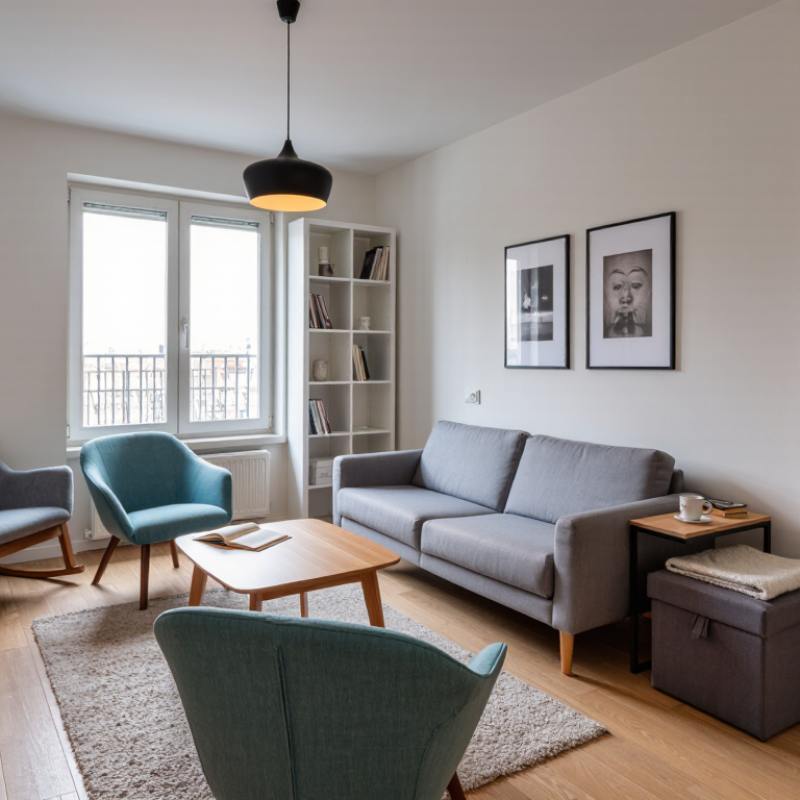
In a small living room, seating should leave space to move, not just fit against a wall. A compact sofa with a narrow frame can provide two or three seats without dominating the room. Check its full width, including arms, and its depth from the back cushion to the front edge. A shallow profile may open up a walkway, though very shallow seats can feel uncomfortable during a long evening. Slim arms also create a little more usable seat space. Measure twice.
Armless chairs offer flexible seating when a full sofa feels too bulky. Their open sides make it easier to angle one toward the sofa or tuck it beside a small table. Choose a chair that is light enough to move, but stable enough for everyday use; a wobbly chair is no bargain. Leave a clear path between seating and doors, and test the arrangement with people actually sitting down. It is easy to misjudge the space on paper. Even well-scaled pieces can make a room feel crowded if cushions are oversized or furniture is pushed too close together. A slightly mismatched pair of chairs may work better than a perfectly coordinated set, but comfort still needs to win.
In a small living room, flexible tables can provide a work surface without permanently claiming floor space. The U.S. Census Bureau’s 2023 American Community Survey reports an average U.S. household size of about 2.5 people. That is a broad average, but it highlights why shared surfaces need to do more than one job. Nesting tables separate for snacks beside the sofa, then slide together when guests need a clear path. Choose a lower table that tucks fully underneath; even a few inches left exposed can catch knees or block a walkway. They are not magic.
A drop-leaf desk can serve as a narrow console by day and a laptop spot when opened. The U.S. Energy Information Administration’s 2020 Residential Energy Consumption Survey puts average home floor area at roughly 2,300 square feet, though that figure says little about any one living room’s usable space. Measure your own room instead. Check the desk’s full depth, chair clearance, and the route to the door before buying. A practical detail: keep a power outlet within reach, so a charging cable does not cross the walking path. There is a trade-off. Smaller folding surfaces can feel cramped for paperwork, and the hinge may need occasional adjustment. A quick test with masking tape on the floor can reveal whether the open desk truly fits.
Small living rooms need surfaces that earn their footprint. A storage ottoman can hold throws, board games, or spare cushions while doubling as a footrest. Choose a firm, flat top if you plan to use it as a tray table. Houzz’s 2024 U.S. Houzz & Home Study reported that 54% of surveyed homeowners renovated in 2023, with median renovation spending of $24,000. The study did not track furniture choices, but it underscores why measuring before buying matters.
A slim coffee table keeps the center of the room usable. Look for open legs, rounded corners, and a narrow profile that leaves a clear path from sofa to doorway. Around 14 to 18 inches between sofa and table is a practical starting point; test the distance in your own room. Small rooms punish clutter. The trade-off is real: an ottoman’s lid can be awkward when someone is sitting on it, and a tiny table may not hold much. I still find that one well-sized surface beats two cramped ones.
Tips: Tape the furniture outline on the floor before purchasing. Check the ottoman lid with a cushion on top, and make sure the table leaves room to walk past. Measure twice.
| Furniture Piece | Typical Dimensions (W × D × H) | Useful Storage or Surface Detail | Small-Room Benefit |
|---|---|---|---|
| Storage Ottoman | 24–36 × 18–24 × 16–18 in (61–91 × 46–61 × 41–46 cm) | Lift-up seat; interior storage varies by size, often around 2–5 cu ft (57–142 L) | Works as seating, a footrest, and a place to store blankets or games. |
| Slim Coffee Table | 36–42 × 16–20 × 16–18 in (91–107 × 41–51 × 41–46 cm) | Narrow tabletop; lower shelf models provide an additional surface | Provides a useful landing spot while leaving more room to walk around it. |
| Nesting Side Tables | Largest table: 18–22 × 16–20 × 18–22 in (46–56 × 41–51 × 46–56 cm) | Smaller tables tuck beneath the larger one when not in use | Offers flexible surface space without permanently occupying a large footprint. |
| Compact Sofa | 68–78 × 32–36 × 32–36 in (173–198 × 81–91 × 81–91 cm) | Some designs include a lift-up seat or a storage compartment | Provides everyday seating with a shorter length than a full-size sofa. |
| Armless Accent Chair | 24–30 × 28–34 × 30–36 in (61–76 × 71–86 × 76–91 cm) | Open sides reduce visual bulk; some versions have a compact footprint | Adds an extra seat that can fit beside a sofa or near a window. |
| Storage Bench | 36–48 × 14–18 × 17–19 in (91–122 × 36–46 × 43–48 cm) | Hinged lid or drawers can hold shoes, cushions, or small household items | Combines seating and concealed storage along a wall or beneath a window. |
| Wall-Mounted Floating Shelf | 24–48 × 8–12 × 1–2 in (61–122 × 20–30 × 3–5 cm) | Open display surface; mounting hardware should suit the wall type | Uses vertical space instead of taking up floor area. |
| Narrow Console Table | 36–48 × 10–14 × 28–32 in (91–122 × 25–36 × 71–81 cm) | Top surface for lamps or keys; some models include a lower shelf | Fits behind a sofa or against a wall while keeping the walkway relatively clear. |
| Lift-Top Coffee Table | 36–44 × 20–24 × 16–19 in (91–112 × 51–61 × 41–48 cm) | Rising tabletop creates a higher work or dining surface; many designs include concealed storage | Combines a coffee table with a convenient surface for working or eating. |
| Compact Bookcase | 24–32 × 10–14 × 48–60 in (61–81 × 25–36 × 122–152 cm) | Several vertical shelves for books, baskets, and decorative items | Stores items vertically and can reduce the need for multiple small cabinets. |
In a small living room, empty wall space can do useful work without claiming floor area. A pair of shelves above a sofa can hold paperbacks, a small lamp, and a shallow tray for remotes. Keep heavier items low, and check the wall type before choosing fixings; drywall alone may not support a loaded shelf. Measure first.
Choose shelf depth according to what you plan to store. Eight to ten inches often fits books and framed photos while keeping a walkway clear, but measure your actual objects. Leave breathing room. A crowded row looks heavier and makes dusting awkward. A narrow bookcase can fit beside a doorway or sofa arm, where a wide cabinet might obstruct movement. Check its stability, secure tall units with suitable wall fixings, and follow the stated load limits.
Place frequently used books between waist and eye level, and reserve upper shelves for lighter décor or items you rarely need. This can make reaching easier for children and older adults. One drawback: vertical storage can feel cluttered quickly. A shelf may look balanced in a sketch, then feel busy once the books arrive. Edit the display now and then, and leave one shelf partly open.
A media console can add useful storage without making a small living room feel crowded. Choose a shallow unit with closed doors for games, cables, and spare chargers. Keep the television at a comfortable viewing height, and leave space around vents so equipment can release heat. Measure the wall, nearby doors, and walking path before buying. A console that fits the wall may still block a doorway. Small details matter.
A storage bench can sit beneath a window or along an entry wall. Use it for blankets, board games, or extra cushions. A lift-up seat offers hidden storage, while baskets inside can make small items easier to find. Check the seat height and depth; a bench that looks neat may feel awkward for daily use.
Tips: Measure twice, including the lid’s opening space. Leave a clear path past the bench. Store heavy items low. Try placing a cardboard box where the furniture will go before committing. It is not elegant, but it can reveal a tight fit. Keep frequently used objects within easy reach, and avoid filling every compartment. A little empty space makes the room easier to use.
Space-Smart Storage: Media Consoles and Storage Benches
Estimated floor footprints are calculated from representative length × depth dimensions. Actual furniture sizes vary. Compact media consoles and storage benches can add useful storage while taking up less floor space than a full-size sofa.
Check its full width, including the arms, and measure its depth. Slim arms can leave more room for sitting. Measure twice.
Yes. They are easier to angle beside a sofa or tuck near a small table. Choose a stable chair that is light enough to move.
Leave a clear path to doors and test the layout with people seated. Oversized cushions can crowd a room. Paper measurements can mislead.
They separate for snacks, then slide together to open a walkway. Check that the lower table tucks fully underneath. Knees need room.
It can serve as a narrow console and open for laptop work. Measure its depth and chair clearance before buying. Test with floor tape.
Keep an outlet within reach so a charging cable does not cross the walking path. Small desk surfaces may feel cramped for paperwork.
Eight to ten inches can hold many books and framed photos. Measure your own items, and leave some open space. Dusting matters.
Check the wall type, suitable fixings, and stated load limits. Secure tall units properly. Heavy items belong on lower shelves.
Keep everyday books between waist and eye level, and place lighter décor higher up. Edit the display now and then. It may still feel busy.
Choosing the right furniture can make a small living room feel comfortable, organized, and surprisingly spacious. What furniture is essential for a small living room? Start with compact seating, such as a small-scale sofa or armless chairs, which provide a place to relax without crowding the room. Nesting tables can be separated when needed and tucked together afterward, while a drop-leaf desk offers a practical work surface that takes up little space when folded.
Look for pieces that serve more than one purpose. A storage ottoman can provide seating, a footrest, and a place to keep everyday items, while a slim coffee table leaves more room to move. Use wall shelves and narrow bookcases to make the most of vertical space. Finally, a streamlined media console or storage bench can conceal clutter and keep essential belongings close at hand. Together, these versatile pieces help create a living room that feels open and functional.

Living Land Furniture